Document the objects in your care, and give researchers and visitors another way to explore them.
Photographic 3D recording, planned around the collection and the purpose of the work.
FORM / SURFACE / DETAIL
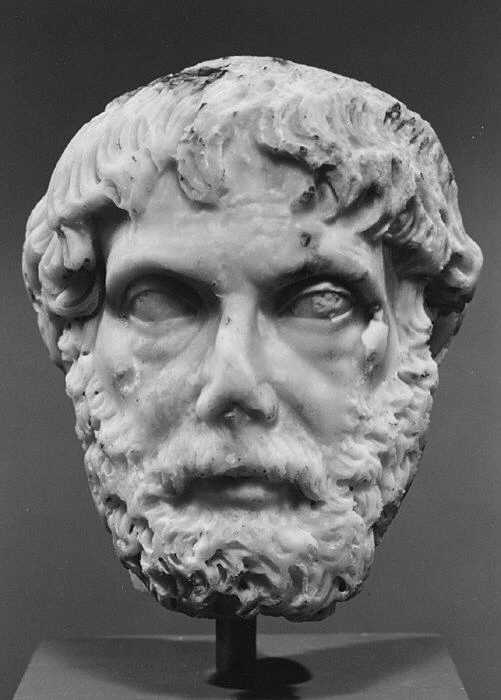
Public-domain reference · Roman marble headThe Met ↗
BUILT AROUND THE COLLECTION
A useful record. A clear purpose.
The right approach depends on what a model needs to do. A research reference and a public-facing display may call for different outputs from the same capture.
01 / COLLECTION STUDY
Look from another angle.
A textured model gives colleagues another way to inspect an object’s visible form and surface, alongside photographs and the physical object.
Coverage and processing limitations are recorded. Any requirement for scale or measurement is discussed before capture.
02 / PUBLIC INTERPRETATION
Make room for discovery.
A display version can let visitors turn an object on screen and explore details beyond a single catalogue view.
We agree the intended viewing platform and prepare the files for that setting, with appropriate object information and credit.
03 / COLLECTION RECORDS
Keep the context with it.
Files can be named around the museum’s object identifiers and delivered with a concise capture and processing record.
The handover identifies areas that could not be recorded and any alterations made during preparation.
WORKING WITH YOUR TEAM
From access to a usable record.
Handling arrangements and permissions are agreed with the people responsible for the collection.
01
Scope
Identify the objects, intended uses and required permissions. Discuss material suitability and access.
02
Capture
Photograph within the museum’s handling requirements and the agreed working arrangements.
03
Review
Inspect the reconstructed model and discuss coverage, limitations and any display preparation.
04
Hand over
Deliver the agreed model versions with object identifiers and supporting documentation.
THE HANDOVER
Files with a future use.
Deliverables are agreed around your collection systems and intended use.
3D model files
A textured model and, where required, a lighter version for an agreed display setting.
Capture & processing record
A concise account of the work, known gaps in coverage and model alterations.
Object identifiers & credits
Agreed naming, attribution and reuse terms to keep the digital object connected to its record.
MUSEUM QUESTIONS
Before we begin.
Can the work support academic research?
Yes, where the capture method and documented limitations support the proposed use. Measurement or scale requirements need to be discussed in advance. A display model should not automatically be treated as a validated measurement record.
Will our collection enter your academic studies?
Client objects and files are not incorporated into our academic research under a commercial commission. Any research collaboration, including digitisation in exchange for collection or archive access, would be scoped separately with explicit permissions.
Who can publish or reuse the files?
Ownership, licensing, attribution and publication are agreed in writing before work begins. Permission for a museum’s own use is discussed separately from any use in our portfolio or research.
Are all materials suitable for photogrammetry?
No. Reflective, transparent and very featureless surfaces can be difficult to record. The first discussion establishes whether the proposed objects and capture conditions are suitable.
A PROJECT FOR YOUR COLLECTION
Let’s begin with the objects.
Tell us what you hold and how you would like to use its digital record.